HIV Long-Term Survivors Awareness Day (June 5, 2023)

HLTSAD Promo

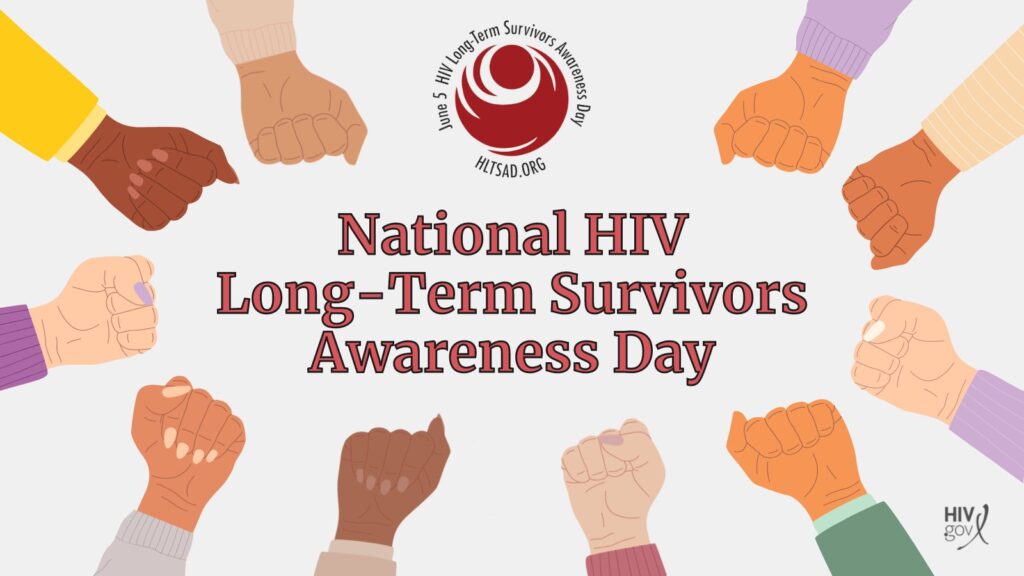
HIV Long-Term Survivors Awareness Day (HLTSAD) on June 5th is a day to honor long-term survivors and raise awareness of their needs, issues, resilience, and experience. The 2023 theme is “Mobilize to Thrive: Prioritizing Quality of Life,” a call to action to prioritize and improve the Quality of Life for long-term survivors and Older Adults with HIV.

This observance day is led by Let’s Kick ASS—AIDS Survivor Syndrome (LKA):

“The selection of June 5 for this annual observance coincides with the anniversary of the first official reporting of what became known as the AIDS epidemic on June 5, 1981. When the CDC first reported on five cases of a mysterious disease affecting young gay men. June 5, 1981 is considered the start of the AIDS pandemic.

Today, HIV Long-Term Survivors (HLTS) represent a diverse group of people diagnosed with HIV before the advent of Highly Active Antiretroviral Therapy or HAART in 1996. We make up about 25% of all people living with HIV and AIDS. 1.2 million people are living with HIV in the U.S. That makes about 300,000 long-term survivors, defined as individuals who acquired HIV before 1996 and the introduction of HAART.

HLTS also includes people born with HIV or who acquired the virus as babies and are now in their 30s and 40s. HLTS are also those living with HIV and AIDS for over 25 years.

People living with HIV/AIDS deserve to age with dignity.”

Let’s Kick ASS identifies the following priorities for long-term survivors:

  • Make the quality of life for HIV long-term survivors and older adults aging with HIV and AIDS a true priority
  • Demand universal treatment access to help end the HIV epidemic, which is the message of the #JourneyTo400K campaign from the team that created Undetectable Equals Untransmittable (#UequalsU)
  • Prioritize culturally aware mental health care
  • Overcome the challenges of poverty and economic insecurity
  • Fight discrimination and invisibility against older adults with HIV and AIDS. It is called “ageism” and will not be condoned.

Care and Wellbeing Center
CWC Logo TransparentLearn more about older adults aging and HIV through our partner organization under the Training & Health Equity Collaborative, the Care and Wellbeing Center (CWC).

The Care and Wellbeing Center provides training and technical assistance to HIV and Aging service organizations across the Western United States, educating providers on how to best care for people living with HIV over 50. CWC’s overall goal is to improve access and quality of care for all people living with HIV over 50.

Stay up to date on CWC learning activities and resources!

Access Relevant HIV Learning Network Trainings:

HIV Learning Network Logo

HIV Learning Network – Geriatric Assessment for People with HIV, Part I: Multimorbidity & Polypharmacy

Description: According to the CDC, the number and percentage of people ≥50 years old with diagnosed HIV continues to increase, 38% in 2011– to 47% in 2015. In this session, Dr. Meredith Greene, MD will review the changes we as providers can expect in our patients with HIV, and review the essential steps and approach required to complete a geriatric assessment.  She will discuss the complexities of patients experiencing multiple morbidities, and how to manage treatment regimens of medications to treat them.

HIV Learning Network – Geriatric Assessment for People with HIV, Part II: Geriatric Syndromes

Desrciption: We invited Dr. Meredith Greene, MD, back to present part II of her June 2021 talk on geriatric assessments to review the IAS-USA 2020 Antiretroviral Drugs for Treatment and Prevention of HIV Infection in Adults 2020 Recommendations that added frailty to the list of recommended assessments to make for aging adults with HIV.

Resources from our Partners:

Happy Pride Month from Pacific AETC! (June 1st, 2023)

Pride Month GraphicJune 1st marks the start of Pride Month. Today, we recognize that the LGBTQ+ community is disproportionately impacted by HIV, and that those across the spectrum may be less likely to seek health care because of discrimination.
For healthcare providers, working to reduce stigma, discussing sexuality and gender identity in an affirming and inclusive way, and informing patients of PrEP and other preventative measures against HIV is essential to the health and wellness of patients who identify as LGBTQ+. When we stand up to HIV stigma, we create a space where everyone can be their authentic selves.

Access the HIV Stigma & LBGT Communities HIV Learning Network (HIVLN) webinar by Shawn Demmons, MPH, Director, Pacific AETC – Bay Area, North & Central Coast below:

HIV Learning Network Logo


Access the following Pride Month resources from HIV.gov:

Celebrating Pride, Together.

Cross-posted from HIV.gov

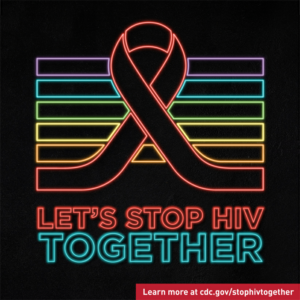
“Happy Pride Month! Pride season is upon us, and Pride events are full of opportunities to engage with the LGBTQ+ community and our communities at large to share important messages to reduce HIV stigma and address testing, prevention, and treatment. In celebrating Pride together, CDC’s Let’s Stop HIV Together campaign has developed this Pride-in-a-Box guide with materials to help partners and organizations meet their audiences where they are. This comprehensive resource includes everything you need to run a successful Pride event from start to finish. It includes posters, palm cards, brochures, and more to use on-site. There are web banner ads and social media assets that you can use to “wrap around” your Together Pride events, as well as tips and tricks for pre-planning, day of, follow up, and evaluation of your Together Pride activation.

We encourage you to use our social media assets throughout Pride season for promotion and engagement. The materials address the full array of key HIV topics including HIV testing, condoms, pre-exposure prophylaxis (PrEP), HIV treatment, being undetectable, and reducing HIV stigma. To help you plan your activities, this guide is divided into sections with specific strategies for implementing the Together campaign for Pride season, gaining visibility at your local Pride festival, conducting post-Pride follow-up activities, and even suggestions and tips to help you evaluate the success of your efforts. It also includes ideas to help you host a virtual Together online Pride event when you can’t attend a festival or when circumstances don’t allow for in-person events.

A Pride event in your community is a prime time to highlight your HIV work. This guide will help you plan your virtual or in-person Together Pride activities with:

  • Specific strategies for gearing up for Pride season
  • Activating at your local Pride festival
  • What to do after your Pride activities
  • A set of digital and print materials to make your Together Pride event one to remember!

If you aren’t planning any events yourself but you plan to attend any Prides this year, keep your eyes open for Together Pride events happening across the country hosted by Together’s various PACT Partners and Community Ambassadors.

This Pride season let’s take pride in stopping HIV together.”

New: Rapid Antiretroviral Therapy Toolkit

Rapid Antiretroviral Therapy Toolkit

This toolkit describes how to initiate, enhance, or maintain rapid ART in various settings; develop and sustain linkage to care (LTC) activities; and includes resources to develop staff skills in implementing a rapid ART program. This toolkit outlines promising practices for HDs; CBOs; clinical settings, especially those that do not receive Ryan White HIV/AIDS Program funding, such as Federally Qualified Health Centers (FQHCs); and community-based pharmacies. Finance and training resources are also provided to support rapid ART efforts.

Created by Primary Care Development Corporation, My Brother’s Keeper, the San Francisco Community Health Center, and the Denver Prevention Training Center with support and guidance from the Centers for Disease Control and Prevention.


New FDA Recommendations for Assessing Blood Donor Eligibility (May 11, 2023)

Cross-posted from FDA News Release

FDA Finalizes Move to Recommend Individual Risk Assessment to Determine Eligibility for Blood Donations

FDA Logo

Today, the U.S. Food and Drug Administration finalized recommendations for assessing blood donor eligibility using a set of individual risk-based questions to reduce the risk of transfusion-transmitted HIV. These questions will be the same for every donor, regardless of sexual orientation, sex or gender. Blood establishments may now implement these recommendations by revising their donor history questionnaires and procedures.

This updated policy is based on the best available scientific evidence and is in line with policies in place in countries like the United Kingdom and Canada. It will potentially expand the number of people eligible to donate blood, while also maintaining the appropriate safeguards to protect the safety of the blood supply.

These final recommendations are consistent with the policy initially proposed in January. The FDA worked diligently to review and consider all comments submitted to the agency to finalize these recommendations as quickly as possible.

“The FDA has worked diligently to evaluate our policies and ensure we had the scientific evidence to support individual risk assessment for donor eligibility while maintaining appropriate safeguards to protect recipients of blood products. The implementation of these recommendations will represent a significant milestone for the agency and the LGBTQI+ community,” said Peter Marks, M.D., PhD., director of the FDA’s Center for Biologics Evaluation and Research. “The FDA is committed to working closely with the blood collection industry to help ensure timely implementation of the new recommendations and we will continue to monitor the safety of the blood supply once this individual risk-based approach is in place.”

This policy eliminates time-based deferrals and screening questions specific to men who have sex with men (MSM) and women who have sex with MSM. Under the final guidance issued today, all prospective blood donors will answer a series of individual, risk-based questions to determine eligibility. All prospective donors who report having a new sexual partner, or more than one sexual partner in the past three months, and anal sex in the past three months, would be deferred to reduce the likelihood of donations by individuals with new or recent HIV infection who may be in the window period for detection of HIV by nucleic acid testing.

Additionally, under these final recommendations, those taking medications to treat or prevent HIV infection (e.g., antiretroviral therapy (ART), pre-exposure prophylaxis (PrEP) and post-exposure prophylaxis (PEP)), will also be deferred. Though these antiretroviral drugs are safe, effective, and an important public health tool, the available data demonstrate that their use may delay detection of HIV by currently licensed screening tests for blood donations, which may potentially give false negative results. Although HIV is not transmitted sexually by individuals with undetectable viral levels, this does not apply to transfusion transmission of HIV because a blood transfusion is administered intravenously, and a transfusion involves a large volume of blood compared to exposure with sexual contact. As stated in the guidance, individuals should not stop taking their prescribed medications, including PrEP, or PEP, in order to donate blood. The FDA remains committed to evaluating additional data and new technological developments as they become available to inform our donor eligibility recommendations.

The FDA has been evaluating alternatives to time-based deferrals for MSM and helping to facilitate the generation of scientific evidence that would support an individual risk based- assessment blood donor questionnaire. This scientific information has given the agency a solid foundation to support this new policy. The FDA strongly believes the implementation of an individual risk-based approach will not adversely affect the safety or availability of the U.S. blood supply.

The FDA carefully reviewed numerous data sources, including data from countries with similar HIV epidemiology that have implemented an individual risk-based approach for assessing donor eligibility, surveillance information obtained from the Transfusion Transmissible Infections Monitoring System, performance characteristics of nucleic acid testing for HIV and the FDA-funded Assessing Donor Variability And New Concepts in Eligibility (ADVANCEExit Disclaimer) study. The ADVANCE study examined the rates of HIV risk factors, such as anal sex and rates of HIV infection, as well as the usage of medications to treat or prevent HIV infection, among MSM study participants.

Related Information

New: HHS Awards $147 Million to Support Ending the HIV Epidemic in the United States

Cross-posted from the HHS Press Office

Ending the HIV Epidemic logo[On April 27] the Health Resources and Services Administration (HRSA), an agency of the Department of Health and Human Services (HHS), awarded more than $147 million to 49 recipients to advance the Ending the HIV Epidemic in the U.S. (EHE) initiative, which is part of the Biden-Harris Administration’s ongoing efforts to reduce the number of new HIV infections in the United States by at least 90 percent by 2030. This funding will help states and metropolitan areas with the highest levels of HIV transmission link people with HIV to essential care, support, and treatment, as well as support training and other resources for these jurisdictions.
“Ending the HIV epidemic requires us to reach people living with the virus where they are, and that’s exactly what this program allows us to do,” said HHS Secretary Xavier Becerra. “Through this program and others, we will continue our work to destigmatize this deadly disease and ensure equitable access to testing and treatment.”

“HRSA is proud to build on our thirty years of experience in the Ryan White HIV/AIDS Program to help lead the fight to end the HIV epidemic in the United States,” said HRSA Administrator Carole Johnson. “We are expanding treatment and partnering with communities to address critical health-related needs like housing and mental health. These awards expand our efforts to ensure that we can reach people with HIV and connect them with the care they need to not just survive but thrive.”

[The] awards include:

  • Nearly $139.1 million to metropolitan areas and states to implement strategies and interventions to provide medical and support services to reduce new HIV infections in the U.S.; and
  • $8 million to two non-profit organizations to provide training and other resources to recipients of EHE funds.

The Ending the HIV Epidemic Initiative focuses on four key strategies:

  • Diagnose all people with HIV as early as possible.
  • Treat people with HIV rapidly and effectively to reach sustained viral suppression.
  • Prevent new HIV transmissions by using proven interventions.
  • Respond quickly to potential HIV outbreaks.

These strategies build on the continued success of the Ryan White HIV/AIDS Program, which supports medical care, medications, and other essential support services to help more than 576,000 people stay in care. Nearly 90 percent of Ryan White clients who receive care reach viral suppression, meaning they cannot transmit HIV, and can also live healthier lives. This rate exceeds the national viral suppression average of 64.6 percent.

For a list of the FY 2023 HRSA HIV/AIDS Bureau EHE award recipients, visit:
https://ryanwhite.hrsa.gov/about/parts-and-initiatives/fy-2023-ending-hiv-epidemic-awards.

For more information about HRSA’s role in the EHE initiative, visit: www.hrsa.gov/ending-hiv-epidemic.

For more information about HRSA’s RWHAP, visit: https://ryanwhite.hrsa.gov/.

For more about the EHE initiative, visit: https://www.hiv.gov/federal-response/ending-the-hiv-epidemic/overview.

New: Updates to the Guidelines for the Use of Antiretroviral Agents in Pediatric HIV Infection

Updates to the Guidelines for the Use of Antiretroviral Agents in Pediatric HIV Infection

Updates to the Guidelines for the Use of Antiretroviral Agents in Pediatric HIV Infection

The Panel on Antiretroviral Therapy and Medical Management of Children Living with HIV (the Panel) has reviewed and updated the text and references of previous versions of the Guidelines for the Use of Antiretroviral Agents in Pediatric HIV Infection published on April 11, 2022, and October 11, 2022Updates were made to the following sections:

  • When to Start
  • Clinical and Laboratory Monitoring of Pediatric HIV Infection
  • What Not to Start: Regimens Not Recommended for Use Antiretroviral-Naive Children
  • Special Considerations for Antiretroviral Therapy Use in Adolescents with HIV
  • Adherence to Antiretroviral Therapy in Children and Adolescents with HIV
  • Management of Medication Toxicity or Intolerance
  • Management of Children Receiving Antiretroviral Therapy
  • Appendix A: Pediatric Antiretroviral Drug Information